

Every time someone tells me “it’s our culture,” I want to ask: whose choice was it, and who benefited from calling it tradition instead of what it actually was.
Because “culture” isn’t one big thing sitting over Africa, unmovable, untouchable. Nobody actually lives inside “African culture” as a whole. A girl lives inside her father’s rules, her aunt’s warnings, her community’s specific version of what’s expected of her. Culture is just a name we give to a long chain of individual choices that people made and then passed down as if they were never choices at all. And a lot of those individual choices, made one family, one decision, one silence at a time, have not been kind to the girl child.
When a father chooses silence
Start with what happens when a girl is sexually assaulted. In some communities, a family will quietly arrange a marriage between her and the man who assaulted her, framing it as damage control. That’s not “culture” acting on its own. That’s a father, an uncle, a mother, deciding in that specific moment that the family’s reputation matters more than the child’s safety, and reaching for tradition to make the decision look inevitable instead of chosen.
Ukuthwala works the same way. Girls abducted and coerced into marriage, sometimes with sexual violence built into the process, and somewhere along the way a community decided to keep calling it custom instead of calling it what it is. Someone always makes that call first. It doesn’t happen by itself.
When a family chooses her marriage over her future
Even without assault involved, a girl married off young is the result of a decision, not an inheritance. Someone decided her schooling could wait, or stop. Someone decided a proposal at 15 was worth accepting. Research on married adolescent girls in Tanzania found many of them enduring sexual coercion in silence, having been individually prepared before the wedding, by people close to them, to see submission as what makes a woman “good.”
Nobody hands a girl that belief by accident. Somebody taught it to her on purpose, believing it was protection or preparation, and calling it tradition made it easier not to question.
When a community chooses a proverb over protection
The part that disturbs me most is what happens after abuse is discovered inside a family. Research out of Zimbabwe found this kind of abuse tends to stay hidden and quietly accepted, not because nobody in the community knows, but because specific people, individually, keep choosing not to speak.
And when a case does surface, sometimes it never reaches the police. It goes to an elder, a traditional leader, someone who resolves it with compensation or an arranged pairing, and a saying gets recited that’s meant to close the conversation. But a proverb doesn’t decide anything by itself. A person chooses to use it that way.
What all these choices cost her
Put those decisions together across a girl’s whole childhood and you get someone raised to orbit men before she’s old enough to know she was allowed to orbit anything else. Not because “culture” demanded it in some abstract sense, but because individual people around her, her own family often, kept choosing his comfort, his name, his convenience over her curiosity, her ambition, her time.
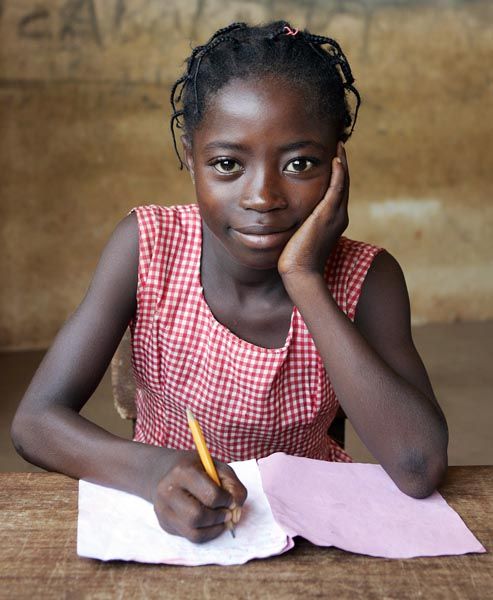
That’s the actual cost. School fees that go to her brother first. Ambition that gets called “too much” before she’s finished naming it. A voice that gets trained quiet, one correction at a time, by people who loved her and thought they were doing right by her.
People made it. People can unmake it.
Chimamanda Ngozi Adichie said it best: “Culture does not make people. People make culture.” If it is true that the full humanity of girls is not currently our culture, then we can and must make it our culture.
That line only works if you take it seriously as individual, not collective. Nobody has to wait for “the culture” to change before they change. A father can choose not to marry his daughter off. An aunt can choose to stop teaching submission as virtue. A community leader can choose the police station over the proverb. Every one of those is a single person’s decision, available to them right now, no permission from tradition required.
The girl child doesn’t need “culture” to evolve somewhere out there in the abstract. She needs the specific people around her to stop hiding behind its name.