

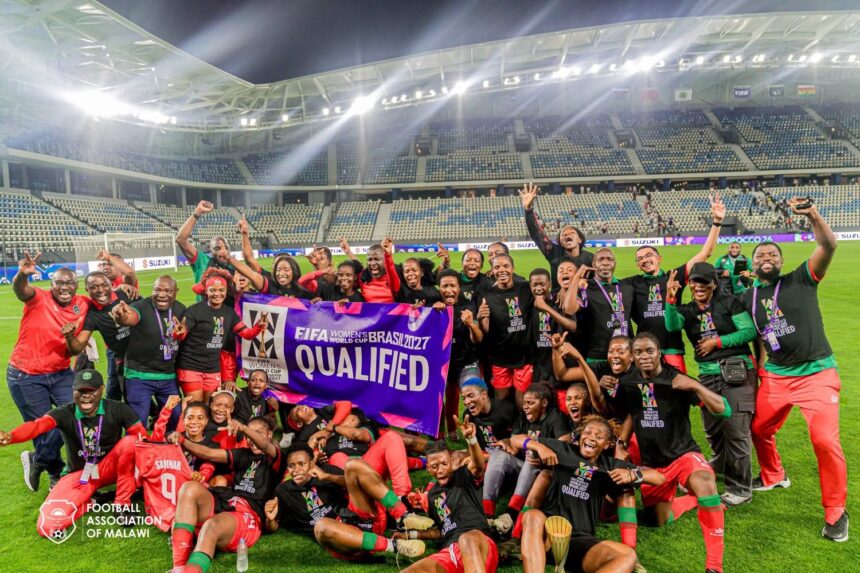
Malawi’s historic qualification for the 2027 FIFA Women’s World Cup has provided another major moment for African women’s football.
Football Association of Malawi president Fleetwood Haiya says investment in football development has played an important role in the country’s breakthrough.
A Historic Achievement for Malawi
Qualification represents a major milestone for Malawi’s women’s national team.
For countries operating with fewer financial and infrastructure resources than many of football’s traditional powers, reaching the World Cup can have an impact extending far beyond the tournament itself.
Successful qualification can increase attention on domestic women’s football, inspire younger players and encourage further investment in facilities and development programmes.
Haiya specifically pointed toward FIFA-supported grassroots and women’s football programmes as important parts of Malawi’s progress.
African Women’s Football Keeps Making Progress
Malawi’s breakthrough comes during a period in which women’s football is receiving increasing attention across Africa.
For developing football nations, consistent investment can help produce better coaching, stronger youth systems and more competitive national teams.
Malawi’s achievement demonstrates how countries outside Africa’s traditional football powers can increasingly challenge for places on the global stage.
More Than Just World Cup Qualification
The benefits could continue well beyond the tournament itself.
A first major qualification can encourage young girls to take up football while giving national associations stronger reasons to invest in women’s leagues and development structures.
For Malawi, appearing at the 2027 Women’s World Cup will provide the country’s players with an opportunity to test themselves against some of the strongest teams in the world.
But whatever happens at the tournament, simply qualifying has already written an important new chapter in Malawi’s football history.
And for African football more broadly, Malawi’s rise is another reminder that the continent’s talent pool extends far beyond its most famous football nations.